
 A student’s desire to be recognized, valued and socially accepted is as important today as it has always been. With smartphones, cameras and social media, any social slips, trips or falls a young person may suffer is often captured, shared, distorted and amplified online for all time.
The ‘Student Restorative Learning Series’ recognizes that although a student is facing disciplinary action for an incident online, at their core they are a good person.
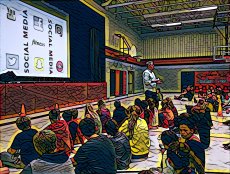
This student session is a distilled version of the larger ‘Digital Intelligence’ school assembly. The slide deck and other elements are eliminated to facilitate immediate learning and constructive next steps.
Because of the smaller group size (even one student), the session and related follow-ups can be arranged on short notice with students gathering in a classroom, office or small meeting room.
THE STUDENT RESTORATIVE LEARNING SERIES . . .
- HOW IT WORKS (1): Delivered remotely via Zoom, Meet or MS Teams, and during school hours, students write one response to four questions: What brings them joy? What are they good at? What are they most proud of? What do they want to be known for?
- HOW IT WORKS (2): Students identify five social media accounts from each of the above four questions – and do three things; (1) Follow those accounts; (2) Read through the account’s content and links on the profiles to learn what is important to that user; (3) How they – the student – can contribute to the user. This is now their primary activity, online. ‘The algorithm always learns and then presents to us what we spend our time on.’
- ACCOUNTABILITY: Two weeks following the initial session is a follow-up to gauge student progress, offer additional support and answer questions. Further follow-ups may be requested.
- BREAKTHROUGH: Students become comfortable with their new perspective on how they spend their time online, the accounts they follow, and WHY. Their ‘filter’ is more intentional and constructive. They begin to contribute, online, in a way that is meaningful while still being connected to their peers – but without the behaviours of the past, and on their own terms.
- SUMMARY: As students acclimate to a renewed sense of what is important to them and how they spend their time online, less desirable choices tend to slip away.
If this experience looks like it will support your school, let’s talk: chris@cmvsocialmedia.com.
COPYRIGHT 2024 CMV SocialMedia Inc. – ALL RIGHTS RESERVED
 CMV SOCIALMEDIA INC.